Signs Your Siding Is Failing Before It Gets Expensive
Siding does one job: keep weather out of your walls. When it stops doing that, the cost of fixing it does not stay flat. It climbs. ADR Precision Builders works on home exteriors across the Hudson Valley, including roofing, decks, siding, and gutters. We see the same problem over and over: a homeowner notices something small, waits a season or two, and by the time we get there the sheathing behind the siding is rotted and the bill is two or three times what it would have been. This post will help you spot the warning signs early, understand what they mean, and decide what to do next.
If you are reading this because something on your siding does not look right, here is the short answer. The clearest signs of failing siding are: warping or buckled boards, cracks or visible holes, bubbling under the surface, paint that will not stop peeling, soft or spongy spots, and any sign of mold or moisture. If you see two or more of these, you are usually past the point of a quick fix.
Why Catching Siding Problems Early Saves You Thousands
Siding is the first line of defense for the wood structure underneath your home. When it fails, water finds the path of least resistance. That path leads to the wall sheathing, then the insulation, then the framing, and eventually the drywall on the inside of your home.
Each step down that path roughly doubles the repair cost. A few damaged panels caught early might be a same-day fix. The same problem found six months later, after a wet winter, often means tearing out a wall section, replacing rotted sheathing, drying or replacing insulation, and dealing with potential mold remediation. None of that work is visible from outside, but it shows up on the invoice.
This is why "expensive" is in the title of this post. Siding does not usually fail in a dramatic way. It fails quietly. The homeowners who pay the most are almost always the ones who waited.
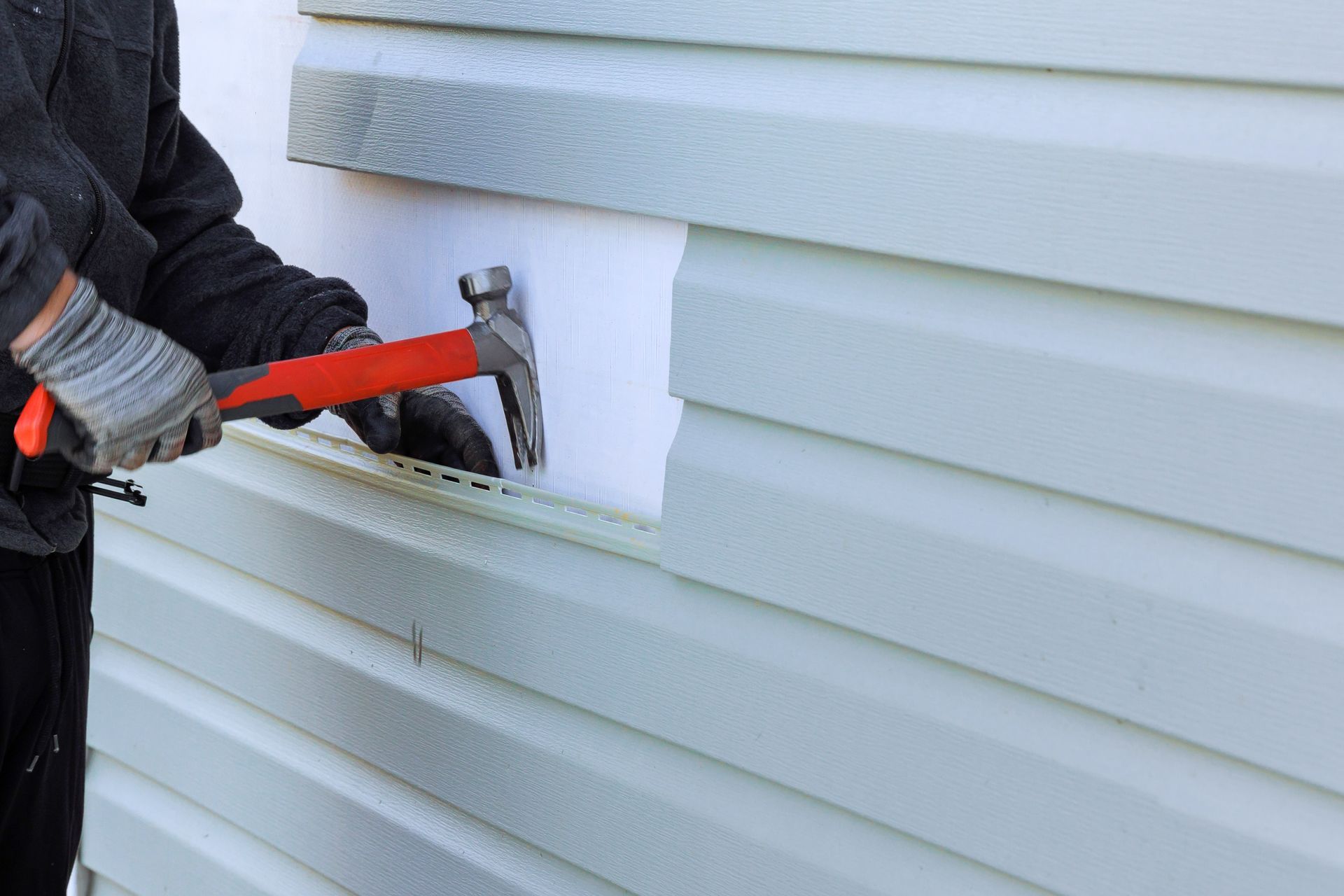
8 Visible Signs Your Siding Is Failing
These are the signs you can see from your driveway or by walking around your home. You do not need any tools. You just need to look.
1. Warping, Buckling, or Bowing Boards
Siding should sit flat against your wall. If you see panels that look like they are pulling away, lifting at the bottom, or curving outward, the material has lost its hold. Vinyl warps from heat or improper installation. Wood warps from moisture. Either way, water can now get behind it.
2. Cracks, Chips, or Visible Holes
Hairline cracks are easy to dismiss. They should not be. Cracks let water in, and water freezing inside a crack during a Hudson Valley winter widens the crack every cycle. Holes from impact, woodpeckers, or pests are an open invitation for moisture and insects.
3. Bubbles or Blisters Under the Surface
If you see raised bubbles or blisters in the siding, water is already trapped underneath. This is most common with vinyl and painted wood. By the time bubbles appear, the moisture problem has been there for a while.
4. Paint That Will Not Stop Peeling
If you painted your siding a year or two ago and it is already peeling, the issue is not the paint. It is the surface underneath. Either the siding is holding moisture or the substrate has degraded to the point where paint cannot bond to it.
5. Faded, Chalky, or Streaked Color
Sun and weather fade siding over time. That is normal. What is not normal is a chalky residue that comes off on your hand when you touch it, or streaks that run vertically below window corners and seams. Chalking means the surface coating has broken down. Streaking often points to water tracking down the inside of the panel.
6. Gaps at Seams, Corners, and Penetrations
Walk to where two panels meet, where siding meets a window frame, and where pipes or vents come through. Any visible gap, separation, or missing caulk is a water entry point. These spots fail before flat sections do.
7. Soft or Spongy Areas When You Press On It
Tap or gently push on siding that looks suspicious. Healthy siding is firm. Soft, spongy, or hollow-sounding siding means the material itself or the wood behind it has begun to rot.
8. Mold, Mildew, Algae, or Visible Moss
Green, black, or gray growth is more than a cleaning issue. It tells you the surface is holding moisture long enough for organisms to live there. North-facing walls and shaded areas are most prone. If a cleaning does not remove it or it returns within months, the siding itself is staying wet.
Hidden Signs You Will Not See From Outside
Some of the most damaging siding failures show up inside your home or on your utility bill before they ever show up on the exterior. These are the ones homeowners miss most often.
- Rising heating and cooling bills with no other explanation. Wet insulation loses most of its R-value. If your bills jumped and your usage habits did not, your walls may be holding water.
- Drafts you can feel near exterior walls. Air moving through your wall cavity means the wall assembly is no longer sealed.
- Water stains on interior walls or ceilings near the exterior wall. A stain on a second-floor wall is often a first-floor siding problem that traveled up the cavity.
- Bubbling or peeling paint on the inside of an exterior wall. This is moisture pushing from outside in. It is rarely just a paint issue.
- A musty smell in a closet or room along an exterior wall. Mold growing inside a wall cavity puts off a smell long before you see it.
If you see any of these and your siding is older than ten years, get the exterior checked before the next wet season.
How Siding Fails by Material
Different siding materials fail in different ways. Knowing which signs apply to your material helps you tell normal aging from real failure.
Vinyl Siding Failure Signs
Vinyl is the most common siding in the Hudson Valley. It fails through cracking, warping, and fading. Cold-weather impact (a snow shovel, an icicle, a stray ball) cracks vinyl easily. Sun exposure fades and embrittles it. Warped vinyl is almost always an install issue (panels nailed too tightly) combined with seasonal expansion and contraction.
Wood Siding Failure Signs
Wood needs to be sealed or it absorbs water. It fails through rot, peeling paint, splitting, and insect damage. The bottom courses near the foundation rot first. Trim around windows is the second weak point. Once rot reaches the wood structure behind the siding, replacement becomes structural work, not just exterior work.
Fiber Cement Siding Failure Signs
Fiber cement is durable but not invincible. Failures show up as cracking at the edges, chipping at fastener heads, and joint separation where panels meet. Painted fiber cement also shows peeling and chalking when the paint system is past its useful life. Properly installed fiber cement can last 30 to 50 years. Poorly installed fiber cement starts showing seam problems in 5 to 10.
Aluminum Siding Failure Signs
Older Hudson Valley homes still have aluminum siding. It fails through denting, fading, chalking, and oxidation. The chalky residue some homeowners notice on aluminum is the painted finish breaking down. Aluminum does not rot, but the trim, fasteners, and underlying sheathing can.
Quick Reference: Siding Lifespan and Common Failure Modes
| Material | Typical Lifespan | Most Common Failure Mode | Key Warning Signs | When to Replace |
|---|---|---|---|---|
| Vinyl | 20 to 40 years | Cracking, warping, fading | Brittle to touch, multiple cracked panels, widespread fading | More than 15% of panels damaged |
| Wood (painted) | 20 to 40 years | Rot, paint failure, insect damage | Soft spots, peeling paint that returns, visible rot at bottom | Rot reaches sheathing or affects multiple boards |
| Fiber cement | 30 to 50 years | Joint separation, edge cracking | Open seams, paint failure, chipping at fasteners | Multiple seam failures or substrate damage |
| Aluminum | 30 to 40 years | Denting, chalking, oxidation | Heavy chalking, widespread dents, faded panels | When repainting will not adhere or trim has failed |
These numbers are general ranges. Climate, installation quality, and maintenance shift them up or down by years.
What Causes Siding to Fail
Knowing the cause helps you decide whether a repair will hold or whether you are treating a symptom. Most siding failures trace back to one of five things.
- Age. Every material has a usable life. Past that point, more boards fail every year.
- Hudson Valley weather cycles. Freeze-thaw, humid summers, ice loading on roofs that drip onto siding, and wind-driven rain all stress the material.
- Poor installation. Nails too tight, no expansion gap, wrong flashing details, missing house wrap. These problems may not show for years, and then they show everywhere at once.
- Water intrusion at penetrations. Vent pipes, light fixtures, hose bibs, dryer vents, and window flashings are the most common entry points. They fail before the field of the siding does.
- Impact and yard maintenance damage. Weed trimmers, ladders, fallen branches, and hail all create localized damage that can spread if not addressed.
If your siding is failing at a single spot, you likely have a localized cause. If it is failing in patches across multiple walls, the cause is usually age or installation.
Repair vs Replace: How to Decide
Not every failing siding job needs a full replacement. The decision usually comes down to four questions.
Repair is usually enough when:
- Damage is limited to a small area on one wall
- Your siding is less than two-thirds of the way through its expected lifespan
- The cause is identifiable and fixable (a leak around a window, a single impact)
- Matching replacement panels are available
Replacement is usually the smarter move when:
- Damage shows up on multiple walls
- Your siding is past two-thirds of its expected lifespan
- The sheathing behind the siding shows signs of rot or moisture
- You cannot find matching panels for repairs
- Recurring repairs are starting to add up
This is similar logic to the repair vs replace decision for roofing. If you want a deeper look at how this kind of decision plays out, our guide on repair or full replacement for roofs walks through the same framework applied to a different system.
How the Cost Climbs When You Wait
This is the part of the post that earns the title. Siding repair costs do not climb in a straight line. They climb in stages, and each stage represents work that was not needed at the prior stage.
Stage 1: Cosmetic
A few damaged panels, intact sheathing behind them, no moisture inside. This is a same-day or same-week repair. The cost is the cost of materials and labor for that section.
Stage 2: Moisture Intrusion Behind the Siding
Water has gotten past the failing panels and reached the house wrap or sheathing. Now you are replacing panels and possibly sheathing in the affected area. Cost roughly doubles compared to Stage 1.
Stage 3: Structural Damage
The sheathing is rotted, framing members are involved, and insulation has been damaged. This is now a wall repair project, not a siding repair project. Cost can run three to five times Stage 1 depending on how much wall needs to come apart. The work also takes longer, because rotted framing has to be replaced piece by piece and the cavity has to dry out before new insulation goes back in.
Stage 4: Mold and Long-Term Cavity Damage
Mold remediation, full wall reconstruction in affected areas, and interior drywall and finish work. Cost is harder to pin down because it depends on extent, but it is significantly more than the original siding job would have been. At this stage you are also dealing with health considerations, displacement during the work, and potential insurance questions about whether the damage is covered. Catching the problem at Stage 1 or 2 avoids almost all of this.
For homeowners weighing the cost question, our breakdown of what affects the cost of a new roof covers a lot of the same cost drivers (material, labor, scope, removal) that apply to siding work as well.
What a Real Siding Inspection Should Include
If you decide to call a contractor for a professional look, here is what a thorough inspection covers. Knowing this helps you tell a real assessment from a sales visit dressed up as one.
A proper siding inspection walks every elevation of your home, not just the front. The contractor should check the field of the siding for cracking, warping, and fading, then move to all the transitions: where siding meets the roofline, windows, doors, foundation, and any penetrations like vents or hose bibs. These transitions fail first and are the most common entry points for water.
A good inspector will also press on suspicious panels to check for soft spots, photograph problem areas with location notes, and look at your gutters and downspouts. Failing gutters dump water onto siding and accelerate damage, so the two systems are often inspected together. If you have an attic with access, a quick check for moisture stains on the sheathing from inside can confirm whether water is making it past the siding.
The inspection should end with a written summary of what was found, photos you can keep, and a clear recommendation: repair, replace, or monitor. If the contractor jumps straight to a quote without showing you what they saw, that is a sign to get a second opinion.
What to Do If You Notice These Signs
Action steps depend on what you found, but the general order is the same.
- Do a walk-around. Look at every side of your home, not just the front. North and west faces often show problems first.
- Photograph and date what you see. This gives you a baseline. If something gets worse over the next few months, you will know.
- Check the inside of the same wall. Look for stains, peeling paint, drafts, or musty smells in rooms behind the suspicious siding.
- Get a professional assessment. A qualified contractor should be able to tell you, without trying to sell you, whether what you have is a repair or a replacement situation. They should be willing to show you what they see.
- Do not wait through a wet season. Spring rain and winter freeze-thaw cycles are when borderline siding turns into structural damage. If you can act before the weather hits, do.
Working With a Hudson Valley Siding Contractor
Choose a contractor who walks the entire exterior, photographs what they find, and can explain the difference between cosmetic aging and a real failure. Ask whether they will show you the sheathing behind a damaged section if you decide to replace. That is where the truth lives. A contractor who is comfortable opening a section in front of you is usually a contractor who is comfortable with what they will find.
ADR Precision Builders provides free siding inspections for homeowners across the Hudson Valley, including Dutchess, Orange, and Ulster counties. If you have noticed any of the signs in this post,
contact us for an honest assessment. No pressure, no scare tactics, just a clear picture of where your siding stands and what your options are.
Frequently Asked Questions
How long should siding last before it starts to fail?
Most modern siding lasts 20 to 50 years depending on the material. Vinyl typically lasts 20 to 40 years, wood 20 to 40 with regular maintenance, fiber cement 30 to 50, and aluminum 30 to 40. Installation quality and climate exposure can move these numbers up or down by several years.
Can I just replace the damaged panels instead of the whole side?
Sometimes. If the damage is limited to a small area, the rest of the siding is in good shape, and you can match the existing material and color, a partial repair makes sense. The risk with partial repairs on older siding is that matching panels may not blend in due to fading, and the panels next to the damaged ones may fail soon after.
How do I know if water is getting behind my siding?
The clearest signs are interior: water stains on walls near exterior corners, peeling paint on the inside of exterior walls, drafts, musty smells, or unexplained increases in heating and cooling bills. From outside, look for bubbling, soft spots, dark staining below seams, and mold growth that returns after cleaning.
Does failing siding lower my home's value?
Yes. Siding is one of the first things buyers and appraisers notice. Visible damage suggests deferred maintenance, which raises questions about what else has been ignored. Home inspectors flag failing siding in their reports, and that almost always becomes a price negotiation point at closing.
Is failing siding a problem I can put off until next year?
Usually no, especially in the Hudson Valley. Freeze-thaw cycles, wet springs, and humid summers accelerate damage in the wall cavity. Most homeowners who wait end up paying more for the same work, plus the cost of repairing whatever the moisture damaged in the meantime.