Do You Need a Permit to Build a Deck in New York?
Yes, in almost every case in New York, you need a building permit to build a deck. The exceptions are narrow and easy to misread. ADR Precision Builders is a Hudson Valley NY contractor that builds decks across Dutchess, Orange, and Ulster counties. We pull permits regularly for the projects we take on, and we have walked plenty of homeowners through the process for their own builds. This post explains when a permit is required under New York State code, when it might not be, what the application involves, what it costs, and what happens if you skip it.
The short version: if your deck is attached to your house, is more than 30 inches above the ground at any point, is over 200 square feet, or serves a required exit door, you need a permit. That covers the vast majority of residential decks in New York.
Why New York Requires Deck Permits
A deck is a structural addition to your home. It carries live loads (people, furniture, snow), it connects to your house through a ledger board in most cases, and it sits on footings that have to handle freeze depth. When any of those is wrong, decks fail. Sometimes they fail dramatically.
That is the reason the New York State Residential Code (the RCNYS) treats decks like any other structural construction. The permit and inspection process exists to make sure footings are deep enough, framing connections are correct, and the finished deck can carry the load it was designed for. From a homeowner standpoint, permits also protect resale value and insurance coverage. We will get into both of those later in this post.

What New York State Code Actually Says
The relevant section of the New York State Residential Code is R105.2, which lists work exempt from permits. For decks on one- and two-family dwellings, the exemption only applies if all of the following are true:
- The deck is not more than 200 square feet in floor area
- The deck is not more than 30 inches above grade at any point
- The deck is not attached to the dwelling
- The deck does not serve a required exit door (the door your home needs for egress under Section R311.4)
The word "all" matters. If any one of those four conditions is not met, your deck needs a permit. A 12 by 12 platform sitting in the yard, 20 inches off the ground, not attached to your house, with no required exit involved? That probably qualifies for the exemption. Almost any other deck does not.
This is the floor, not the ceiling. Local municipalities are allowed to be stricter, and many in the Hudson Valley are.
When a Permit Is Definitely Required
These scenarios always require a permit in New York. There is no exemption argument to make for any of them.
Decks Attached to Your House
Any deck that connects to your home via a ledger board or any structural connection is considered an addition to the dwelling. Even a small attached deck needs a permit.
Decks Over 30 Inches Above Grade
Once the deck surface is more than 30 inches above the ground at any point, fall risk becomes a code issue (guards, rails, baluster spacing) and a permit is required. This applies even if the deck is freestanding.
Decks Over 200 Square Feet
Larger decks involve more framing, longer spans, and more load. A permit is required regardless of height or whether it is attached.
Decks With Roofs, Pergolas, or Permanent Cover
Adding a roof structure changes the load calculations and triggers permit requirements for the roof structure itself, often including electrical permits if lighting or fans are included.
Decks Serving a Required Exit Door
If the door your code-required egress passes through opens onto the deck, the deck is part of your egress path. That always requires a permit, regardless of size.
Replacement Decks
Tearing down an old deck and building a new one is not "maintenance." It is new construction. A permit is required even if the new deck matches the footprint of the old one.
When You Might Not Need a Permit
The exemption exists, but it is narrower than most homeowners think. You might not need a permit if all of the following are true:
- The deck is fully detached from your house
- It is 30 inches or less above grade at every point
- It is 200 square feet or less in area
- It does not serve a required exit door
- Your local town, village, or city does not have stricter rules
That last item is the one most homeowners overlook. State code is the minimum. Many Hudson Valley municipalities require permits for decks at lower thresholds than the state.
Even when the exemption applies, you still have to follow the construction requirements in the code. The exemption only removes the paperwork. It does not remove the requirement that the deck be built correctly.
Why Local Rules Matter More Than You Think
The New York State Residential Code is enforced at the local level. That means the building department for your town, village, or city has authority over what gets approved, when, and how. Two homes a mile apart can be subject to different rules if they sit in different jurisdictions.
In the Hudson Valley specifically, deck permit requirements vary by municipality. Some towns enforce the state exemption as written. Others require a permit for any deck, regardless of size. Some require zoning approval in addition to a building permit. Others have setback rules that affect where on your property you can build.
Before you assume your project qualifies for the exemption, call your local building department. The five-minute phone call is faster than the conversation you will have with them later if you build wrong.
What Goes Into a Deck Permit Application
The exact paperwork varies by municipality, but most building departments in New York require some version of the following.
- Completed permit application form with project address, owner information, and project description
- Plot plan or property survey showing where on the lot the deck will go and how it relates to property lines and setback distances
- Deck construction drawings including a plan view and elevation
- Framing plan showing joist size, spacing, span direction, beam sizes, and post locations
- Footing details including depth (must reach below frost line, which is typically 42 inches in the Hudson Valley), diameter, and concrete specification
- Ledger board attachment details if the deck is attached to the house
- Guard and railing details if any portion exceeds 30 inches above grade
- Stair details if applicable
- Permit fee payment
For larger or more complex decks, some municipalities require an engineer's stamp on the structural drawings. Multi-level decks, decks with roofs, or decks on difficult sites often fall into this category.
The Deck Permit Process Step by Step
The permit process is predictable in shape, even if the timeline varies. Here is how it typically runs in New York.
- Plan the deck and gather documents. This is where homeowners and contractors put together everything in the application list above.
- Submit the application to the building department. Most jurisdictions accept paper, email, or online submissions. Some now require online submission.
- Initial review by a building inspector or code officer. They check your plans against the code and your local zoning rules.
- Revisions if needed. Plan revisions are common, especially on the first deck permit a homeowner has applied for. Expect at least one round of comments.
- Permit issued and posted. Once approved, the permit must usually be posted at the work site, visible from the road.
- Footing inspection. Most jurisdictions require an inspection of the footing holes before concrete is poured.
- Framing inspection. Once the framing is up but before any decking is installed, an inspector checks the structural connections.
- Final inspection. After the deck is complete with rails and stairs, a final inspection verifies everything matches the approved plans.
- Certificate of compliance or completion. Some municipalities issue a final certificate once inspections pass. Keep it with your home records.
Skipping any step on a permitted project creates problems at the next inspection.
How Long Does a Deck Permit Take in New York?
Timelines vary widely depending on your municipality, the time of year, and how complete your application is. Here is a realistic range.
- Simple deck, complete application, off-season: 2 to 4 weeks
- Simple deck, complete application, peak building season (spring and early summer): 4 to 6 weeks
- Complex deck or first-time submission requiring revisions: 6 to 10 weeks
- Decks requiring zoning variance or engineering review: 8 weeks to several months
The single biggest factor is whether your application is complete and correct on the first submission. Plans that need revision get sent back, and the clock essentially restarts for that section of the review.
If you are planning a summer deck project, applying in late winter or early spring is the smart move. Permits in March face shorter queues than permits in May. For a deeper look at how permits factor into the overall build, our breakdown of how long it takes to build a deck covers the rest of the timeline.
How Much Does a Deck Permit Cost in New York?
Permit fees in New York are set by each municipality, and the structure varies. Some towns charge a flat fee for residential building permits. Others scale the fee with the estimated project value or the deck's square footage. Common ranges:
- Flat-fee municipalities: $50 to $200 for a typical residential deck
- Value-based fees: Often $10 to $20 per $1,000 of construction value
- Square-footage-based fees: A few dollars per square foot, sometimes with a minimum
For a typical 200 to 400 square foot residential deck in the Hudson Valley, permit fees usually fall between $100 and $500. Decks requiring engineering stamps, zoning variances, or multiple permits (electrical, for example) cost more.
These fees are separate from your construction cost. They are also non-refundable in most jurisdictions, so submitting a clean application matters.
Who Pulls the Permit: Homeowner or Contractor?
Either can. The right answer depends on your situation.
When the Contractor Pulls It
Most professional deck builders pull the permit themselves. The contractor's name goes on the permit, the contractor is responsible for the work meeting code, and the contractor schedules and meets the inspectors. This is the path of least resistance for homeowners. It also means the contractor's license and insurance are on the line if anything is wrong with the build.
When the Homeowner Pulls It
Some homeowners pull permits for their own projects, either because they are building the deck themselves or because a contractor asked them to. Pulling your own permit makes you the responsible party for the work. If the deck does not pass inspection, the building department comes to you, not the contractor. If something fails later and there is a claim, the question of who pulled the permit can matter.
In general, if you are hiring a licensed contractor, the contractor should be pulling the permit. If a contractor asks you to pull the permit yourself, ask why. The most common reason contractors give is that they are not licensed in the municipality, which is a signal worth paying attention to.
What Happens If You Build Without a Permit
This is the part homeowners underestimate most. The consequences of unpermitted construction in New York show up at four different stages, sometimes years apart.
| When It Catches Up | What Happens | Cost Impact |
|---|---|---|
| During construction | Stop-work order, fines, possible forced removal | Project halted, daily fines, legal fees |
| At final inspection of other work | Existing deck flagged, retroactive permit required | Permit fees plus engineering to verify code compliance after the fact |
| When you sell the home | Buyer's inspector flags it, title or financing complications | Price negotiation hit, or work to retroactively permit at closing |
| At an insurance claim | Coverage may be denied if deck contributed to incident | Out-of-pocket repair or liability exposure |
The most common scenario is the third one. Homeowners build a deck without a permit, live with it for years, and then run into trouble when they sell the house. Buyers' inspectors find the deck, the buyer asks about permit records, and the seller now has to either retroactively permit the deck (which often means partial reconstruction to verify hidden conditions like footing depth) or take a price reduction.
The cost of doing it right the first time is almost always less than the cost of fixing it later.
Inspections During Construction
If you have a permit, inspections are required at specific points in the build. Missing an inspection can mean tearing apart finished work to verify what was underneath.
Typical inspection points for a Hudson Valley deck permit:
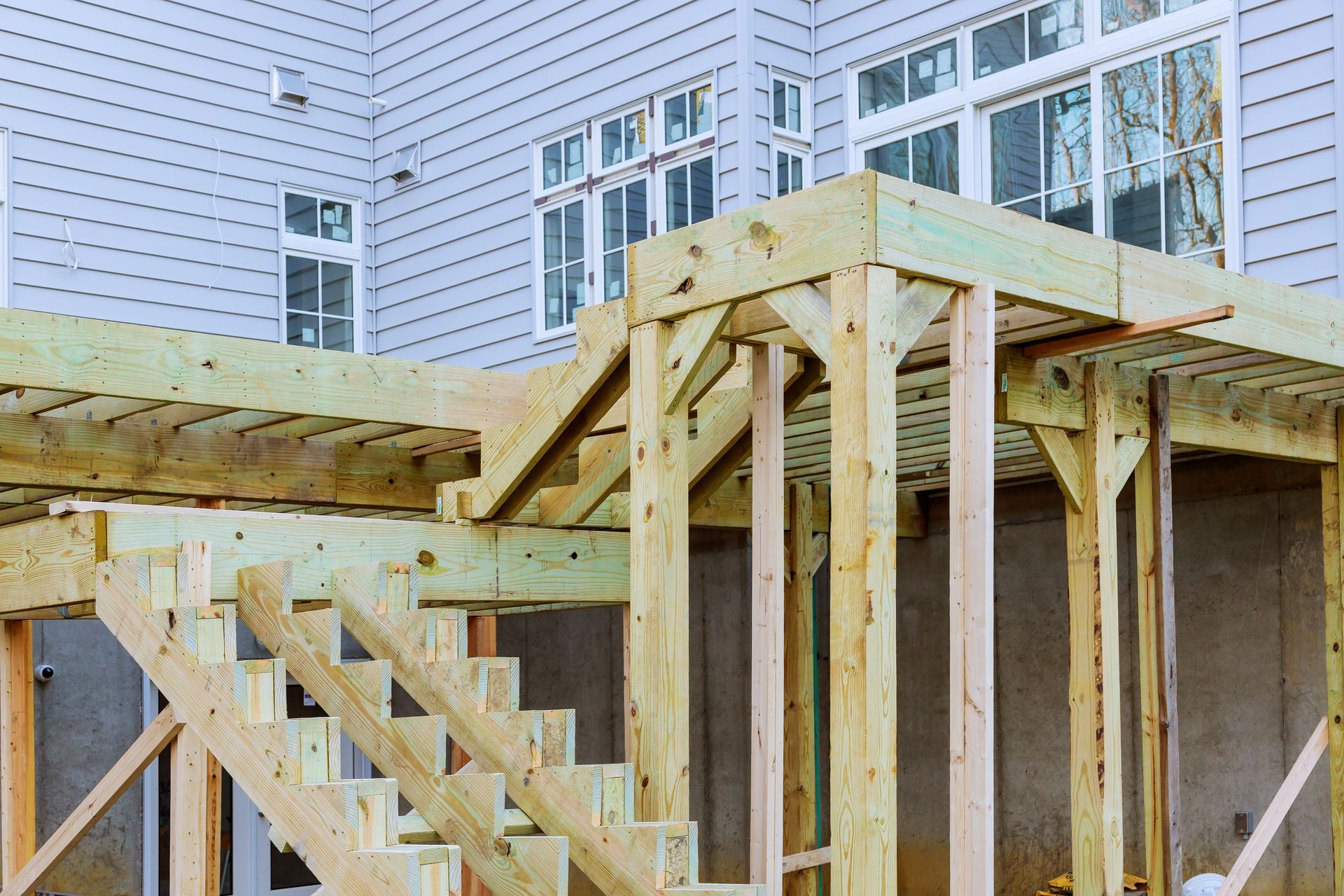
- Footing or hole inspection. Before concrete is poured, an inspector checks that holes are deep enough (below frost line) and the right diameter.
- Framing inspection. After the deck frame is built but before decking is installed. The inspector checks ledger board attachment, joist hangers, beam connections, and post-to-beam connections.
- Final inspection. After decking, rails, and stairs are complete. The inspector verifies the finished deck matches approved plans, guard heights are correct, baluster spacing meets code, and stair geometry is right.
Some jurisdictions add intermediate inspections. Your permit will list exactly what is required and the order they happen in.
Tips for a Smoother Permit Process
A few habits that consistently shorten timelines and reduce headaches:
- Call your building department before you draw the deck. Ask what they want to see in the application.
- Submit a complete application the first time. Missing items are the most common cause of delays.
- If your deck involves a ledger board, include detailed flashing and connection details on the drawings. This is where most plan reviewers focus.
- Know your setbacks before you finalize the deck location. Property line setbacks vary by municipality and zoning district.
- If you are unsure whether you need a zoning approval in addition to a building permit, ask. Some Hudson Valley towns require both.
Choosing the Right Material After You Have the Permit
Once your permit is in motion, the next decision is material. The right deck material in the Hudson Valley has to handle freeze-thaw, wet springs, and humid summers, which is a different challenge than the same deck would face in a milder climate. Our guides on composite vs wood decking and the best deck materials for Northeast weather walk through how each option performs over time.
Working With a Licensed Hudson Valley Deck Builder
The simplest path through the permit process is to hire a licensed deck builder who has worked in your municipality before. They know what the local inspectors want to see, they have submitted plans that have been approved, and they handle the paperwork and inspections as part of the project.
ADR Precision Builders is a licensed Hudson Valley contractor that handles deck permits as part of every deck we build across Dutchess, Orange, and Ulster counties. If you are planning a deck project and want a builder who will handle the permit, the build, and the inspections,
contact us for a quote. We will walk you through what your specific municipality requires and what the realistic timeline looks like for your project.
Frequently Asked Questions
Do I need a permit for a small ground-level deck in New York?
Probably not, if it is fully detached from your house, 30 inches or less above grade at every point, 200 square feet or less, and not serving a required exit door. But local rules can override the state exemption, so always call your municipal building department to confirm before you build.
How much does a deck permit cost in New York?
Most Hudson Valley municipalities charge between $100 and $500 for a typical residential deck permit. The exact fee depends on whether your town uses a flat fee, a value-based fee, or a square-footage-based fee. Decks needing engineering stamps or zoning variances cost more.
How long does it take to get a deck permit approved in New York?
A complete application for a standard deck typically takes 2 to 6 weeks during peak building season and 2 to 4 weeks in the off-season. More complex projects, or applications that require plan revisions, can take 8 to 10 weeks or longer.
What happens if I build a deck without a permit in NY?
You can face stop-work orders, fines, and required removal during construction. After the fact, unpermitted decks cause problems at home sale, can affect insurance claims, and may require retroactive permitting that includes partial reconstruction to verify hidden conditions like footings.
Can my contractor pull the permit, or do I have to?
Most licensed contractors pull the permit themselves and handle the inspections as part of the job. If a contractor asks you to pull your own permit, ask why. The most common reason is that they are not licensed in your municipality, which is a signal worth paying attention to.