Common Causes of Roof Leaks and How to Prevent Them
Most roof leaks come from a handful of predictable weak points: worn or missing shingles, failed flashing around chimneys and vents, clogged gutters and ice dams, cracked vent boots, and aging materials. The good news is that nearly all of them are preventable with regular inspection and quick repairs, and catching a leak early is far cheaper than waiting until water reaches your ceiling.
At ADR Precision Builders, we repair and replace roofs across Dutchess and Westchester Counties, and we see the same leak sources over and over on Hudson Valley homes. As a locally owned contractor certified by GAF, Owens Corning, and TimberTech, with in-house craftsmen rather than subcontractors, we install and diagnose roofs to manufacturer standards every day. This guide reflects what actually causes leaks on real Northeast roofs, not a generic checklist.
In This Guide
- Why a Roof Leak Spreads So Fast: What happens once water gets in.
- The Most Common Causes of Roof Leaks: The weak points that fail first.
- Why Hudson Valley Roofs Leak: Ice dams, snow load, and freeze-thaw.
- How to Find the Source of a Leak: A practical way to trace it.
- How to Prevent Roof Leaks: The habits that keep water out.
- Repair or Replace, and What It Costs: How to decide.
- Frequently Asked Questions: Quick answers for homeowners.


Why a Roof Leak Spreads So Fast
A roof leak is rarely just a roof problem by the time you notice it. Water enters at a weak point on the surface, then travels along rafters, decking, and insulation until it finds a place to drip, which is often several feet from the actual entry point. That is why the water stain on your ceiling almost never sits directly below the hole.
Once moisture is inside the assembly, it does real damage quietly. It soaks decking and framing, feeds mold and mildew, ruins insulation, and can rot structural wood over a single wet season. The longer it runs, the wider the repair, so a leak that starts as a cracked vent boot can end as a replaced section of roof deck if it is ignored.
The Cost of Waiting
The single most expensive mistake a homeowner makes with a leak is treating it as cosmetic. A faint stain today is water that has already passed through your shingles, underlayment, and decking. Addressing it while it is still a small entry point keeps the fix in the realm of a repair rather than a rebuild.
The Most Common Causes of Roof Leaks
Nearly every leak we trace on Hudson Valley homes comes back to one of the causes below. Knowing them helps you spot trouble before it reaches the drywall.
Worn, Cracked, or Missing Shingles
Shingles are your roof's outer shield, and they take the most abuse. Wind lifts and tears them, hail cracks them, and years of sun make asphalt brittle so it curls and loses the granules that protect it. Any gap in that shield lets water reach the underlayment, and once enough granules wash into your gutters, the shingles below are running out of protection.
Failed Flashing Around Chimneys, Valleys, and Walls
Flashing is the thin metal that seals the joints where your roof meets a chimney, a wall, a skylight, or another roof plane. These transitions are the hardest-working part of any roof, and cracked, lifted, or improperly sealed flashing is one of the most common leak sources we find. Valleys, where two slopes meet and channel a huge volume of runoff, are especially prone to it.
Clogged Gutters and Ice Dams
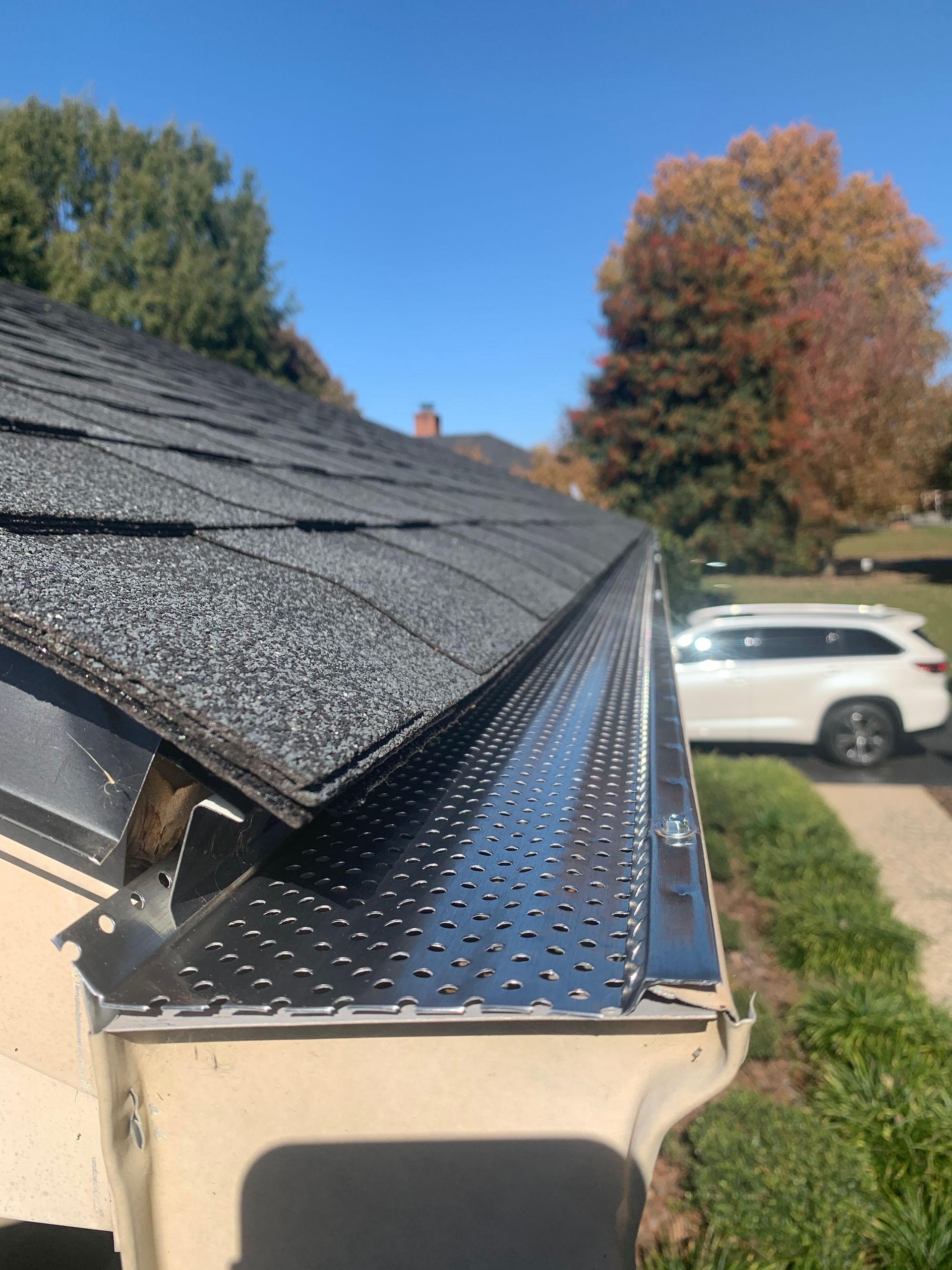
Gutters exist to carry water away from the roof edge and foundation. When they fill with leaves and debris, water backs up under the shingles at the eave and works its way inside. In winter that same backup freezes into an ice dam, a ridge of ice that traps meltwater on the roof until it forces its way under the shingles.
Cracked Vent Boots, Skylights, and Roof Penetrations
Every pipe, vent, and skylight that pokes through your roof is a hole that has been sealed, and every seal has a lifespan. The rubber boot around a plumbing vent is a frequent culprit, cracking and drying out from years of heat and UV long before the surrounding shingles fail. Skylights leak the same way when their seals age or the flashing around them was rushed.
Age, Wear, and Poor Installation
Even a flawless roof wears out. As materials reach the end of their service life, they lose the flexibility and seal that kept water out. And a surprising share of chronic leaks trace back to the original installation, where poor flashing detail, wrong nailing, or low-quality materials created weak points that were destined to fail early.
| Common Cause | Warning Sign to Watch For | How to Prevent It |
|---|---|---|
| Damaged or missing shingles | Granules in gutters, curled or bare spots | Inspect after storms, replace promptly |
| Failed flashing | Rust, gaps, or stains near chimney or walls | Reseal or replace at first sign of wear |
| Clogged gutters and ice dams | Overflow at eaves, icicles, water at foundation | Clean gutters twice a year, improve attic ventilation |
| Cracked vent boots or skylights | Stains around a fixture or pipe | Replace brittle boots, recheck seals annually |
Why Hudson Valley Roofs Leak
Roofs in Dutchess and Westchester Counties face a specific kind of punishment that milder climates do not, and it changes which leaks are most common here. Our winters run the roof through repeated freeze-thaw cycles, and that cycle is what turns small flaws into active leaks.
When snow on the roof melts during the day and refreezes at night, water expands as it freezes and pries apart any crack it has seeped into, widening it a little more each cycle. Ice dams form at the cold eaves while the upper roof stays warm, trapping meltwater that then backs up under the shingles. Heavy snow load stresses the whole assembly, and the wind-driven rain of a Nor'easter can push water uphill under shingle edges that would stay sealed in a gentler climate.
The practical takeaway is that a Hudson Valley roof needs attic ventilation and insulation that keep the roof deck cold and even in temperature, because that is what prevents the melt-and-refreeze that drives ice dams. It also needs to head into winter with no small defects left open, since freeze-thaw will find every one. Our guide on
how to prepare your roof for winter walks through that seasonal prep in detail.
How to Find the Source of a Leak
Because water travels before it drips, finding the real entry point takes a little detective work. You can often narrow it down yourself before calling anyone, which makes the repair faster.
- Start inside and mark where the water shows up, noting the highest point of the stain on the ceiling or in the attic.
- Go into the attic with a flashlight during or right after rain and trace the wet path uphill along the rafters to where it originates.
- Look at the roof features directly above and uphill of that point, since chimneys, vents, skylights, and valleys are the usual sources.
- Check the shingles and flashing in that zone for cracks, lifting, rust, or a dried-out vent boot.
- Photograph what you find and keep the water contained, then call a professional rather than climbing a wet or snow-covered roof yourself.
The reason the last step matters is safety. A roof is slick and steep, and a leak inspection is not worth a fall, especially in the wet or icy conditions that often reveal the leak in the first place.
How to Prevent Roof Leaks
Most leaks are the end result of small problems that had time to grow. A little routine attention stops the vast majority of them before they ever reach your ceiling.
- Inspect twice a year and after every major storm, looking for lifted shingles, granule loss, and damaged flashing.
- Keep gutters and downspouts clear, cleaning them in spring and fall so water always has a path off the roof.
- Maintain attic ventilation and insulation, which keeps the roof deck cold and even and is your best defense against ice dams.
- Trim overhanging branches, since they drop debris, trap moisture, and can scrape or puncture shingles in wind.
- Fix small issues immediately, replacing a single cracked boot or a few loose shingles before freeze-thaw turns them into an interior leak.
Clean, functioning gutters do more of this work than people realize, which is why the choice between
seamless and sectional gutters matters for leak prevention as much as appearance.
Repair or Replace, and What It Costs
Once you know the source, the next question is whether a targeted repair will hold or whether the roof is telling you it is near the end. As a general rule, an isolated leak on an otherwise sound roof with years of life left is a repair, while widespread granule loss, multiple leaks, or a roof past roughly 20 years is often better addressed with replacement.
Costs vary widely with the source and the extent of the damage, so treat any figure as a ballpark until a contractor sees it. A minor repair such as replacing a vent boot or a small run of flashing typically lands in the lower hundreds of dollars, while repairs that involve replacing damaged decking and a section of shingles run higher, and a full replacement is a separate decision driven by the roof's overall age and condition. For a sense of full-replacement pricing, see our breakdown of
what affects the cost of a new roof, and for the repair-versus-replace decision itself, our guide on
telling whether your roof needs repair or replacement goes deeper. For pricing specific to your roof, the most reliable number comes from an on-site estimate.
Protect Your Home With ADR Precision Builders
A roof leak only gets more expensive the longer it runs, and the fastest way to keep a small problem small is to have it looked at by someone who repairs Hudson Valley roofs for a living. Our in-house team diagnoses the true source, not just the symptom, and fixes it to last.
Call ADR Precision Builders at (914) 705-2045 or
request a free estimate online. Learn more about our
roof repair and
roofing services throughout Dutchess and Westchester Counties.
Frequently Asked Questions
How do I know if my roof is leaking or if it is just condensation?
A true roof leak usually appears or worsens during and after rain and leaves a defined, spreading stain, often near a chimney, vent, or skylight. Condensation tends to show up as widespread dampness or frost in the attic during cold weather with no clear entry point. If wet spots track back to a specific roof feature uphill, it is a leak; if the whole attic is damp, the cause is more likely ventilation.
Can a roof leak without any visible damage on the shingles?
Yes. Many leaks start at flashing, vent boots, or skylight seals rather than the shingle field, so the shingles can look fine from the ground while water enters at a sealed penetration. Failed flashing around a chimney or a cracked rubber boot is one of the most common leaks we find on roofs that otherwise appear intact.
Why is my roof leaking only in winter?
Winter-only leaks almost always point to ice dams. Meltwater from the warmer upper roof refreezes at the cold eaves, forms a ridge of ice, and backs water up under the shingles where it drips inside. The fix is usually better attic ventilation and insulation to keep the roof deck cold, which stops the melt-and-refreeze cycle that creates the dam.
Is a roof leak an emergency?
An active drip during a storm should be contained right away by catching the water and moving valuables, but the roof repair itself is safest done by a professional in dry conditions. What makes a leak urgent is not the size of the drip but how long it has been running, since even a slow leak causes mold and rot over time. Do not climb a wet or snowy roof to investigate.
How often should I have my roof inspected in the Hudson Valley?
At least twice a year, ideally in spring and fall, plus after any major wind, hail, or snow event. Our climate's freeze-thaw cycles are hard on roofs, so a fall inspection before winter and a spring inspection to catch winter damage together prevent most leaks from ever developing.