Seamless vs Sectional Gutters: What's the Difference?
The main difference is simple: seamless gutters are formed from one continuous piece of metal cut to fit your home, while sectional gutters are pre-cut pieces joined together with seams. Seamless gutters have far fewer joints, which means fewer places to leak and less maintenance, but they cost more and must be professionally installed. Sectional gutters are cheaper and DIY-friendly but leak and clog more often at the seams. For most New York homes, seamless is the better long-term choice.
At ADR Precision Builders, we install and replace roofing and gutter systems across the Hudson Valley, from Poughkeepsie and Fishkill to Rhinebeck, Beacon, and Kingston. We see how both gutter types hold up through our heavy rain, snow, and freeze-thaw cycles, so the comparison below is based on how they actually perform in our climate.
Start with the quick comparison, then dig into the details that matter for your home.
In This Guide
- The quick comparison: Seamless vs sectional at a glance.
- What are seamless gutters?: How they work and their tradeoffs.
- What are sectional gutters?: How they work and their tradeoffs.
- Cost, leaks, and maintenance compared: Where the real differences show.
- Which is right for your home?: Matching the choice to your situation.
- Why it matters in New York: Our climate raises the stakes.
- Frequently asked questions: Quick answers to common questions.
The Quick Comparison
If you want the short version, here is how the two systems stack up on the factors homeowners care about most. Each row is covered in more detail further down.
| Factor | Seamless Gutters | Sectional Gutters |
|---|---|---|
| Seams | Only at corners and downspouts | Every few feet along each run |
| Leak risk | Low, few joints to fail | Higher, seams are weak points |
| Cost | Higher upfront | Lower upfront |
| Installation | Professional only | DIY-friendly |
| Maintenance | Less frequent | More frequent |
| Lifespan | Longer | Shorter |
The pattern is consistent: seamless costs more up front and requires a pro, but leaks and clogs less over time. Sectional is cheaper and easier to install but demands more upkeep. Keep your own priorities in mind as you read the details, since the right pick depends on what you value most.
What Are Seamless Gutters?
Seamless gutters are the more modern option and now the standard for professional installations. Understanding how they are made explains most of their advantages, so it is worth a quick look at the fabrication before the tradeoffs.
How They Are Made
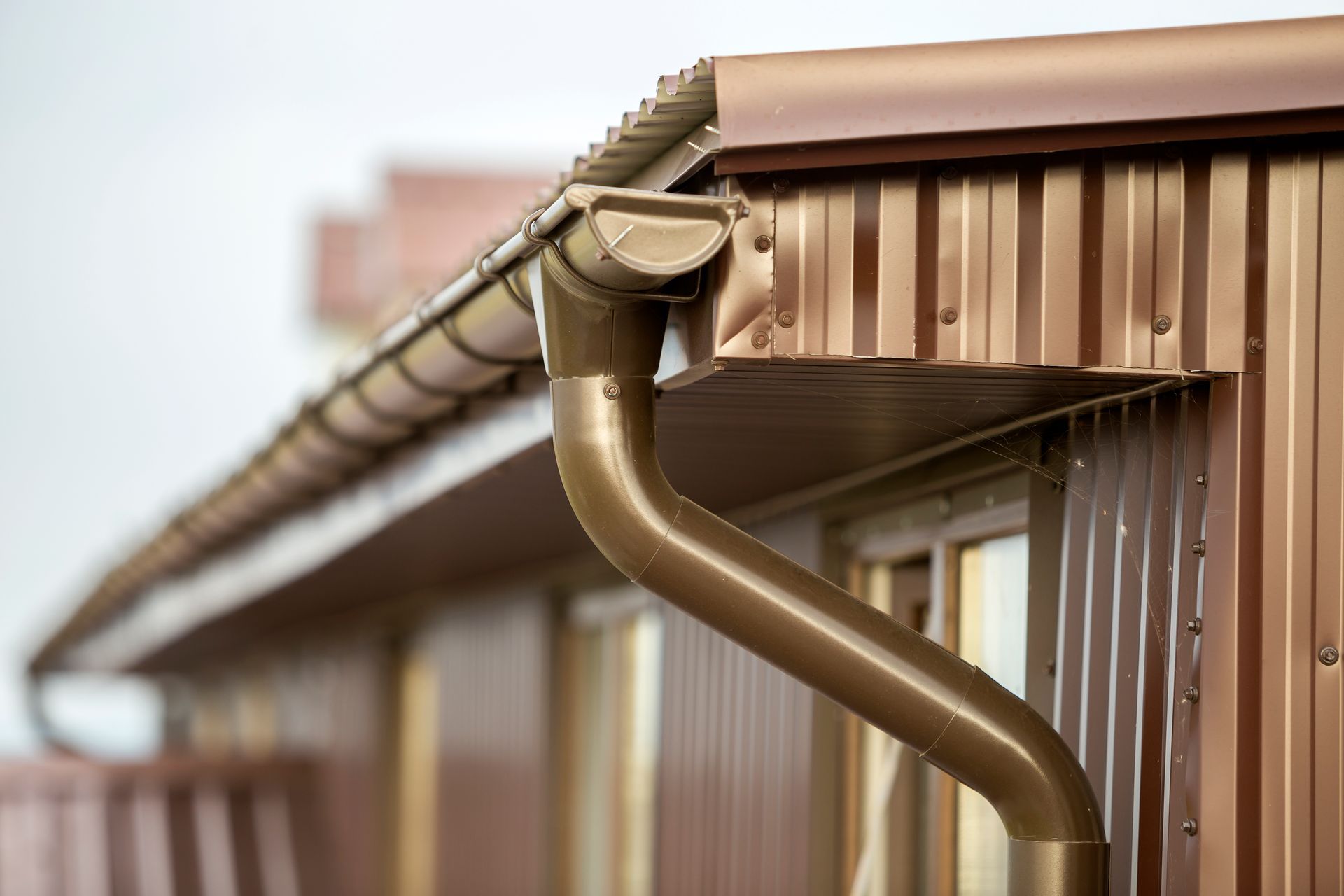
Seamless gutters are formed on-site from a single continuous coil of metal, usually aluminum, using a special machine that cuts each run to the exact length of your home. The only seams are at the corners and where downspouts connect, so a straight run of any length has no joints at all.
Because a crew fabricates them to fit, they follow the exact dimensions of your roofline. This custom fit is a big part of why they perform so well.
The material also matters. Most seamless gutters are aluminum, which resists rust and is light enough to handle in long runs, though copper and steel are available for homeowners who want added durability or a specific look. Whatever the metal, the on-site forming means there is no need to piece together standard lengths that never quite match your home.
The Tradeoffs
The advantages are fewer leaks, less maintenance, a cleaner look, and a longer lifespan. With almost no seams, there are far fewer points where water can escape or debris can catch.
The cleaner appearance is a real selling point for many homeowners, too. Without connectors breaking up the run, seamless gutters present one smooth line along the roofline, which looks more finished and tends to suit both modern and traditional Hudson Valley homes.
The tradeoff is cost and installation. Seamless gutters require professional fabrication and installation, so they cost more up front and are not a DIY project. For most homeowners, the lower long-term maintenance offsets the higher initial price.
It is worth noting that seamless does not mean maintenance-free. The gutters still need periodic cleaning to keep debris from clogging them, and the corners and downspout connections should be checked occasionally. The point is simply that there are far fewer failure points to watch than with a sectional system.
What Are Sectional Gutters?
Sectional gutters are the traditional option and the one most people picture. They are still widely used, especially for smaller budgets and DIY projects, and they remain the default at most home improvement stores.
How They Are Made
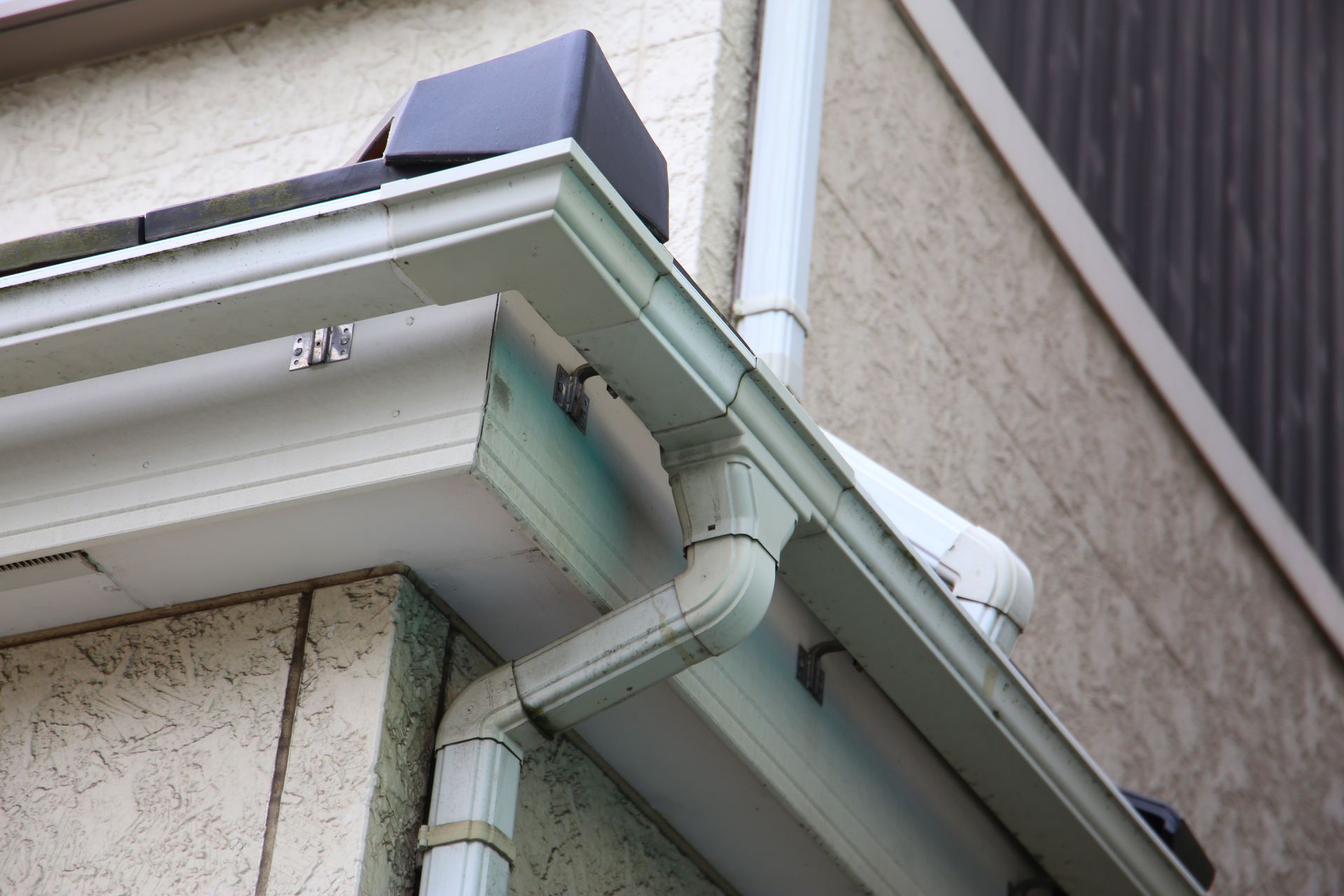
Sectional gutters come in pre-cut lengths, often ten feet, that are joined together with connectors and sealed at each seam. You assemble the runs from these pieces and fasten them to the fascia, adding corners and end caps as needed.
Because they come in standard sections, they are sold at home improvement stores and can be installed by a capable homeowner over a weekend. That accessibility is their main appeal.
The number of seams depends on the length of your gutter runs, since each standard section adds another joint. A long, straight run on a large home can end up with many connectors, and every one of them is a spot that must be sealed correctly and maintained over time.
The Tradeoffs
The advantages are a lower upfront cost and DIY-friendly installation. If you are handy and working with a tight budget, sectional gutters are approachable, and the materials are easy to source locally on short notice.
The downside is the seams. Every joint is a potential leak point and a place where debris collects, so sectional systems tend to leak, clog, and need resealing more often over their life. Those seams are also where nearly all sectional gutter failures begin.
The sealant at each joint is the real weak spot, since it degrades over time and with temperature swings. Resealing seams becomes a recurring maintenance task, and a missed leak can quietly damage the fascia and soffit behind the gutter before you notice it. Over enough years, that added upkeep can erode the initial savings.
Cost, Leaks, and Maintenance Compared
The quick comparison shows the differences, but a few of them deserve a closer look because they drive the long-term value. Cost and leak resistance are the two that most often decide the choice.
Cost Over Time
Sectional gutters win on upfront cost, plain and simple. The materials are inexpensive and widely available, and a DIY install removes labor costs entirely, so the initial outlay is low.
If the material were the only factor, sectional's low price would win, but leaks and upkeep are where the true cost lives.
But the fuller picture includes maintenance, repairs, and replacement over the years. Seamless gutters cost more at install but typically last longer and need less attention, which narrows or erases the gap over the life of the system.
Think of it the way you would any home component: the cheapest option is rarely the least expensive once you add up years of upkeep. For a home you plan to keep, the math often favors paying more once rather than repeatedly patching a cheaper system. For a short holding period, the upfront savings may win out.
Leaks and Maintenance
This is where seamless earns its reputation. Every seam in a gutter is a weak point that can loosen, separate, or leak as the metal expands and contracts with temperature swings through the seasons.
Sectional gutters have many such seams, while seamless gutters have almost none. That means fewer leaks, less debris catching at joints, and less time spent resealing and clearing the system each year.
Debris behaves differently between the two, as well. In sectional gutters, leaves and grit snag on the internal connectors and build up faster, accelerating clogs. Seamless interiors are smooth from end to end, so water and debris move toward the downspouts with less to catch on along the way.
Which Is Right for Your Home?
There is no single right answer, but the best choice usually becomes clear once you weigh your priorities against your situation. It mostly comes down to how long you will stay, your budget, and how much maintenance you are willing to take on.
When Seamless Makes Sense
For most homeowners planning to stay in their home, seamless is the stronger long-term investment. The lower maintenance and leak risk pay off year after year.
- You want low maintenance and fewer leaks over time.
- You are staying in the home for the long term.
- You want a clean, custom look that fits the roofline.
This is the choice we recommend for the majority of Hudson Valley homes, simply because our weather is hard on seams and most owners would rather not think about their gutters every season. The upfront premium buys years of lower hassle.
When Sectional Might Work
Sectional gutters still have their place, mostly where budget or a DIY approach is the priority. They can be a reasonable short-term solution or a stopgap while you save for a larger project.
- You are on a tight budget and need the lowest upfront cost.
- You want a DIY project and are comfortable with the work.
- It is a short-term fix on a property you plan to sell soon.
If gutter problems are already causing roof or fascia issues, it is worth having the whole system evaluated, since failing gutters often go hand in hand with other issues like failing siding.
One middle path worth mentioning: some homeowners choose sectional gutters now with a plan to upgrade to seamless when the roof is next replaced. Since gutters and roofing are often handled together, bundling the two can be more efficient than doing each separately, and it ensures the new gutters are matched to a fresh roof edge.
Why It Matters in New York
Gutter choice carries more weight in our climate than in milder regions. Hudson Valley weather is hard on gutters, and the seams are where that stress concentrates, so the seamless advantage is more pronounced here than it would be in a mild, dry climate.
Freeze-Thaw and Heavy Weather
Our winters bring repeated freezing and thawing, which expands and contracts the metal and works at every joint. Over time, this is exactly what loosens and separates the seams in sectional gutters, and it is why sealant at those joints does not last as long here as it would in a gentler climate.
Heavy rain, snow, and ice also put real load on the system. A gutter that stays sealed and drains freely protects your roof edge and foundation, while one that leaks contributes to ice dams and water damage.
Ice is especially unforgiving on seams. When water sits in a sectional gutter and freezes, the expansion pries at every joint, and a seam that was merely weak in the fall can be leaking outright by spring. This is the core reason seamless tends to outperform sectional in northern climates like ours, where a hard freeze is a certainty rather than an exception.
Protecting the Rest of the Roof
Gutters are part of a larger system that keeps water away from your home. When they fail, the damage does not stay in the gutter; it spreads to the roof edge, fascia, and foundation.
Because of that, gutter performance ties directly into overall roof health, which is why we consider it alongside any roofing project. Getting the gutters right is part of protecting the whole roof through a New York winter.
Overflowing or leaking gutters send water exactly where you do not want it: down the fascia, behind the siding, and pooling against the foundation. Over time that leads to rot, basement moisture, and erosion, all of which cost far more to fix than the gutters themselves. Reliable gutters are cheap insurance against those larger problems.
Choosing the Right Gutters for Your Home
Seamless and sectional gutters both move water off your roof, but they do it with very different levels of reliability and upkeep. For most Hudson Valley homes, seamless gutters are the better long-term choice, while sectional can make sense for a tight budget or a short-term fix on a home you plan to sell.
At ADR Precision Builders, we help homeowners choose and install the right gutter system as part of a healthy roof. When you are ready,
request an estimate or
reach out to our team to talk through your options. We will help you weigh cost against long-term value for your specific home, and factor in the age and condition of your roof while we are at it.
Frequently Asked Questions
Are seamless gutters worth the extra cost?
For most homeowners staying in their home long-term, yes. Seamless gutters leak less, need less maintenance, and last longer, so the higher upfront cost is often offset by fewer repairs and less upkeep over the years.
Do seamless gutters ever leak?
They can, but far less often than sectional gutters. Seamless gutters only have joints at the corners and downspouts, so there are very few points where a leak can start compared to sectional systems with a seam every few feet.
Can I install seamless gutters myself?
No. Seamless gutters are fabricated on-site from a continuous coil using specialized equipment, so they require professional installation. Sectional gutters are the DIY-friendly option if you want to do the work yourself.
How long do seamless gutters last?
With proper installation and occasional cleaning, quality seamless aluminum gutters can last for decades. The lack of seams is a big reason they tend to outlast sectional systems, which fail first at the joints.
Which gutters are better for a New York winter?
Seamless gutters generally hold up better through our freeze-thaw cycles, since they have almost no seams to loosen and separate as the metal expands and contracts. Whichever type you have, keeping them clean and draining is key to preventing ice dams.